
How Local Food Processing Creates More Value for Rural Producers
Introduction
A harvest does not automatically provide a livelihood. For rural producers, much depends on what happens after crops leave the field: whether they are sold quickly as raw commodities or processed, packaged and marketed closer to home. Rural food processing can help communities make more of what they grow.
Processing grain, drying fruit, chilling milk or turning tomatoes into shelf-stable products can create value beyond the farm gate and help producers earn a larger share of it. This value addition can support rural food processing, but the benefits are not guaranteed. Equipment, working capital, skills and access to buyers all affect whether processing becomes a reliable source of income or an expensive idle asset.
The key question is not just whether a community can process food through rural food processing, but who owns the operation, who bears the risks and how much of the extra value goes back to the people who grew the raw materials. The answer can have a direct effect on producer incomes.
How the Supply Chain Works
Rural food economies can follow two broad models. In one, producers sell unprocessed goods into long agricultural supply chains, with limited control over timing, grading or final prices. In the other, farmers, cooperatives or local businesses add processing capacity and take on more of the work involved in bringing products to market. Rural food processing can connect these activities more closely.
Selling raw produce can work well when transport is reliable, buyers compete and producers have storage or bargaining power. But when harvests arrive all at once, perishable goods weaken producers’ position. Farmers who need to sell quickly may accept low prices, even when demand is strong elsewhere.
Processing brings more people and organizations into the supply chain. Producers provide raw materials; local enterprises operate equipment and manage quality; workers sort, pack and distribute products. Lenders, extension services and public agencies may also provide financing, training or infrastructure. In rural food processing, these partners need to coordinate their roles.
These roles need to fit together. A cooperative mill without a reliable supply of grain may struggle to cover its costs. A processor without dependable access to retailers may be left with unsold stock. Successful operations coordinate production, processing capacity and confirmed demand rather than treating each as a separate project.
The value of processing cannot be measured by the selling price of the finished product alone. The calculation must include the costs of raw materials, energy, labor, packaging, storage, transport, maintenance and losses. The net margin, and how it is shared, shows whether producers’ incomes have actually improved.
Key Factors
Scale is one of the first considerations for rural food processing. A small facility may suit a group of farms and a nearby market, but it can be inefficient if it operates only during a short harvest season. Larger plants may reduce costs per unit, but they require more investment and a steady supply of raw materials. This can increase the risk that small producers are excluded or paid too little.
Because production is seasonal, storage and scheduling are essential. Drying, freezing, cooling and grain storage can extend the time available to sell a product and ease pressure to sell everything at harvest. This flexibility can strengthen producers’ bargaining position, but only if storage is safe and affordable and suits products buyers actually want. Such planning is an important part of rural food processing.
Quality standards determine whether processing opens up new markets or simply changes a product’s form. Consistent grading, food safety, traceability and packaging require training and regular checks. If a batch is rejected, farmers who supplied the ingredients may bear much of the cost.
Access to finance is also crucial. Equipment requires upfront investment, and businesses need cash to buy crops, pay workers and cover utilities before sales bring in revenue. Short-term credit can bridge the gap, but debt becomes risky when a facility lacks reliable buyers or realistic cash-flow forecasts.
Local ownership can keep more earnings in the community, but it does not guarantee fair returns. Contracts should clearly set out pricing rules and quality requirements, and explain how profits and losses are shared. Transparent records and producer representation can help prevent processors from using their stronger position to the disadvantage of suppliers. These safeguards matter for local enterprises involved in rural food processing.
It is also important to reach more than one market. A processor that depends on a single crop, buyer or season is vulnerable to price changes and disruptions. Market diversification through products with different shelf lives, buyers or uses can spread risk, as long as the business does not expand into lines it cannot run efficiently.
Public investment is most useful when it addresses a clear gap, such as rural roads, electricity, water, testing facilities or technical support. It is less effective when it funds a plant without a sound business plan. The USDA’s overview of why local food systems matter outlines some of the wider community and market benefits that local processing can support.
Local processing should also be assessed in light of its full costs. Water and energy use, packaging waste and food loss matter, as do wages and working conditions. A facility may increase sales while depleting local resources or relying on insecure jobs. In that case, it may create value on paper while weakening the surrounding rural economy.
Example
Imagine two neighboring districts facing a bumper fruit harvest. In the first, growers sell fresh produce immediately to a small number of buyers. The fruit is perishable, transport is expensive and prices fall as supply peaks. Even a productive season can bring farms only modest returns.
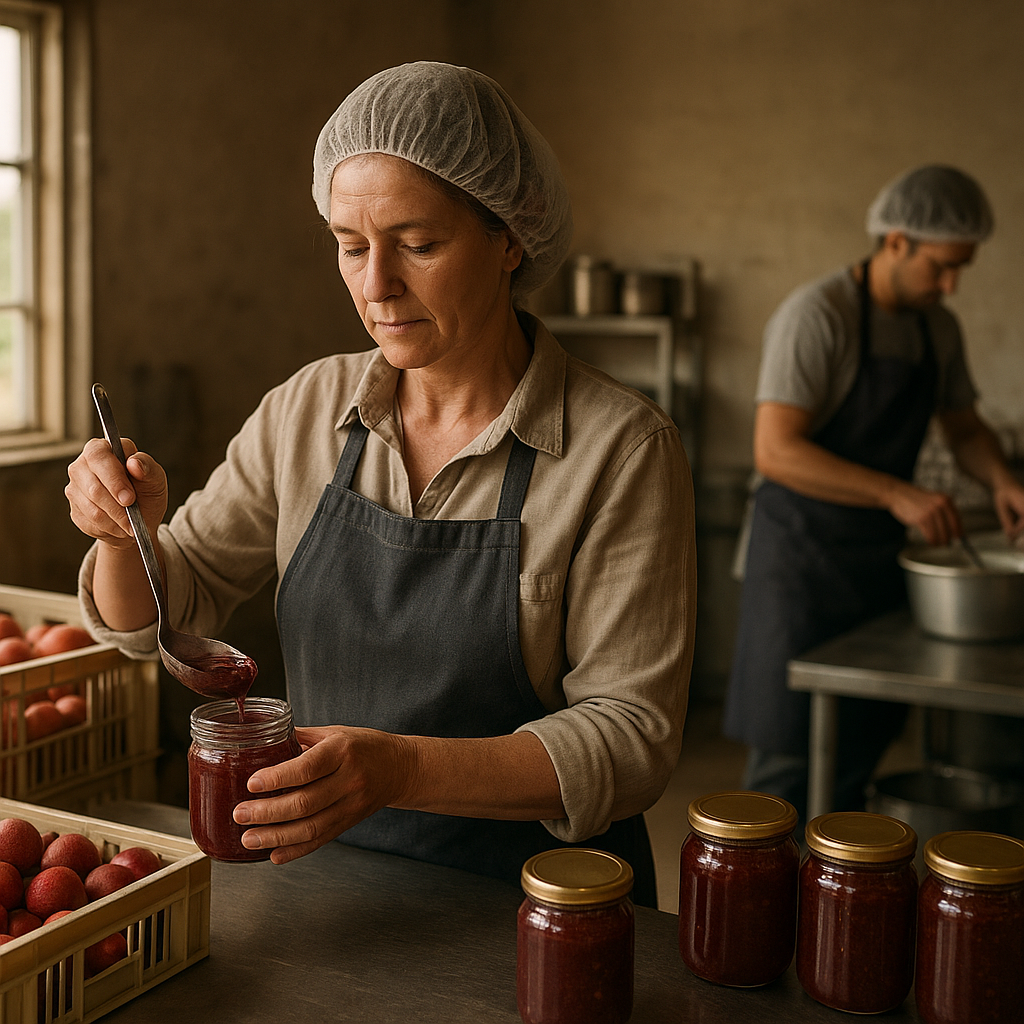
In the second district, a producer group coordinates harvesting with a nearby rural food processing facility that can sort, chill and process fruit into several products. Some produce is sold fresh, while the rest is preserved for later. The facility has agreed quality standards, a working-capital plan and buyers lined up before the season begins.
The second district is better positioned, not because processing guarantees success, but because it has more options. Producers can time sales, reach different customers and negotiate with a clearer understanding of costs and demand. But if orders do not come through, unsold stock and equipment payments can quickly wipe out those advantages.
Preparation before the harvest is crucial. Producers need realistic estimates of available volume, maintenance plans, transparent supply agreements and a credible route to market. The outcome depends less on the machinery than on coordination across the supply chain.
Conclusion
Local processing can give rural producers more control over prices and sales, but it is no shortcut to prosperity. The value of rural food processing depends on a good fit between local supply, technical capacity and actual demand—and on whether producers receive a fair share of the additional income.
When these conditions are met, processing can support stronger businesses, more resilient markets and better returns from each harvest. When they are not, a new facility becomes another cost in a sector already exposed to substantial risk.