
Money Already Lost: The Sunk Cost Trap in Sports Betting
Introduction
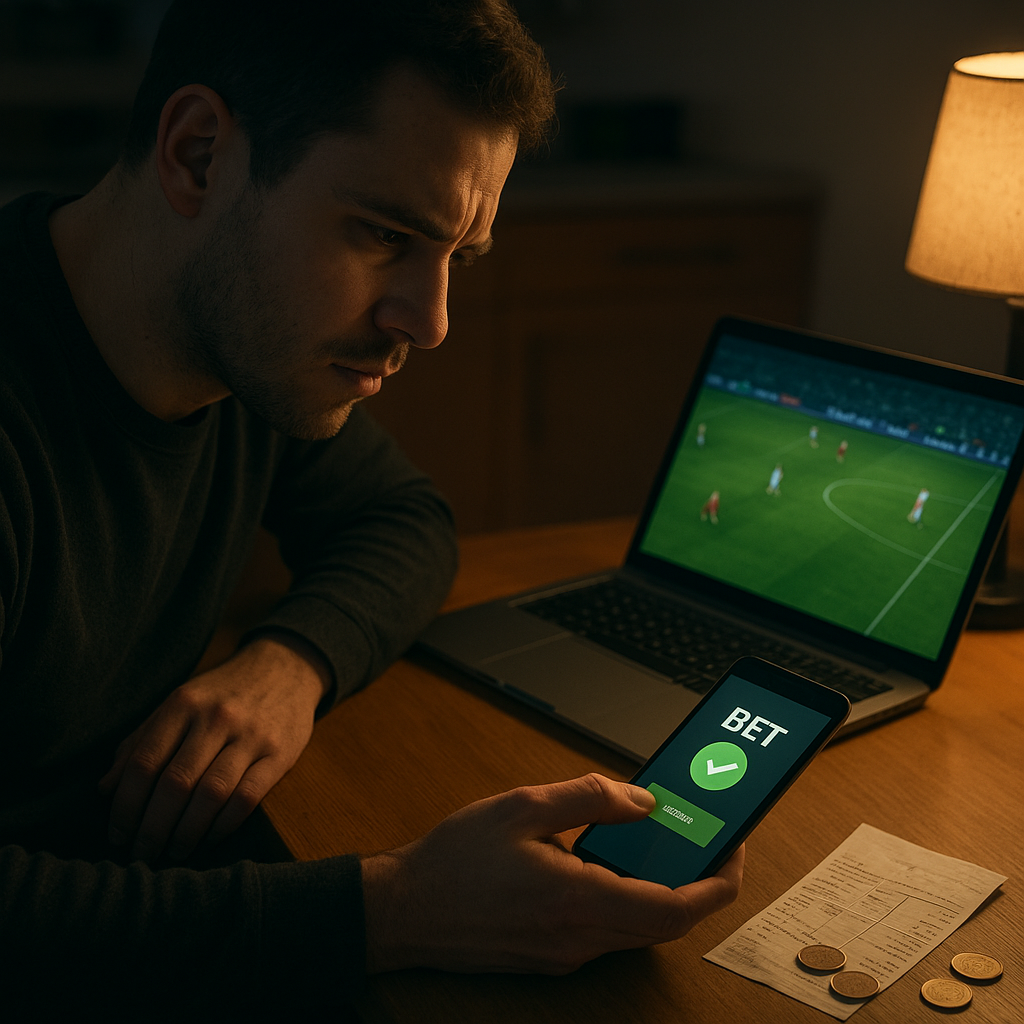
A bet that has lost its value can still be hard to let go. The stake is gone, yet the mind keeps returning to it: one more wager might turn the evening around, soften the loss or prove the original judgement was right.
This is the sunk cost effect: letting unrecoverable past spending influence a decision that should be based on what happens next. In gambling, it can turn one loss into a series of increasingly emotional choices. The challenge is to assess the match without treating money already lost as a reason to risk more.
Analysis of teams or players
Close attention to teams and players can help inform a bet. A bettor might consider the expected line-up, recent form, tactical match-ups, fatigue or changing conditions. These details are useful when they are relevant and assessed objectively.
The danger comes when analysis becomes a defence of an earlier wager. If a backed team falls behind, the bettor may focus on signs of a comeback: a spell of pressure, a favourable substitution or an opponent’s mistake. These details may matter, but not because the stake is at risk. They matter only if they genuinely change the likelihood of the outcome.
The same applies to individual players. A star’s reputation, a previous winning run or the fact that a bet was placed before the event does not make the player more likely to deliver now. Current evidence can change an estimate; attachment to the original pick cannot.
Good analysis looks ahead. Ask what the available information says about the rest of the contest, then compare that assessment with the price on offer. Don’t ask what needs to happen to justify the earlier bet.
Key factors
First, consider whether the original stake is truly unrecoverable. Once a wager has settled as a loss, that money is no longer part of the decision. A cash-out offer or a live position with market value is different: it gives you a choice about whether to sell or hold. Even then, compare the options available now, not their value against the original stake.
Second, separate your current bankroll from your betting history. Money still available matters because risking it has consequences. A previous loss does not make the next bet more likely to win or oblige you to keep betting. Setting a spending limit before play can stop frustration from changing your plan.
Third, watch for loss-chasing. After a loss, you may be tempted to increase your next stake or choose longer odds because a small win would not feel like enough. But a bigger bet cannot repair the previous result. It only increases your exposure and makes the next outcome responsible for both a return and emotional relief.
Confidence can also become a trap. Persistence may feel like conviction, while changing your mind may seem like admitting poor judgement. But updating your estimate when new evidence appears is a sign of sound reasoning, not weakness. You can review the earlier decision later; it should not dictate the next one.
Finally, consider odds and probability separately from the story of the match. A team can look more threatening without being a good bet at any available price. A less promising side may be worth considering if the odds are generous enough. The question is not whether a result is possible, but whether the price reflects its likelihood and the risk fits your limits.
Scenario of a match
Imagine a bettor backs the home side before kick-off. The visitors take an early lead, making the original bet unlikely to pay out. At half-time, the home side has more possession, so the bettor places another wager on a comeback, hoping to recover some of the first stake.
That reasoning mixes two separate things. One is evidence about the match: the home side’s pressure, the quality of its chances or a tactical change might suggest its prospects have improved. The other is the earlier loss. Only the first should affect a fresh estimate; the second is an emotional response, not a reason to bet.
A more disciplined assessment starts with the state of the match and the current odds. What has changed since kick-off? Is the home side creating real chances, or just holding possession? How much time remains? Do the odds already account for the team’s position? These questions concern the likely outcome, not the lost stake.
There is no need to place another bet. If the evidence is unclear, the odds are unattractive or the spending limit has been reached, stopping is a valid decision. It does not make the first wager worse, just as continuing does not make it better. The match will settle the bet, but it cannot turn a loss-chasing decision into a sound one after the fact.
This scenario also shows why it can be hard to let go of a pre-match view. Once a bettor has committed to a team, each new detail can seem to confirm that choice. Pausing to write down the reasons for a new wager—without mentioning the earlier stake—can reveal whether the case stands on its own.
Conclusion
The sunk cost effect is not simply forgetting that money is gone. It is the instinct to believe that future action can make up for past spending. In sports betting, that can make a losing position feel like a problem that must be solved at once, even when no new wager can undo the loss.
Sound decisions depend on the situation now: the evidence, the odds, the remaining budget and the risks. Analyse teams and players carefully, but keep that analysis separate from money already lost. A past stake can explain disappointment; it cannot improve the chances of the next bet.