Community-Led Disaster Preparedness for Rural Livelihoods
Introduction
Disaster readiness is often framed as a contest between a community and the next storm, flood or drought. But the outcome is shaped long before a hazard arrives, by everyday decisions about information, trust and responsibility. Strong community disaster preparedness begins with these choices, well before a crisis.
Community disaster preparedness is more than a plan written for a village. It is the ability of people who know the local terrain, livelihoods and limits of outside support to make sound decisions together. Success does not mean preventing every loss. It means turning warnings into timely action to protect lives, assets and the chance to recover. Effective community disaster preparedness builds on local knowledge and shared responsibility.
For rural households, the risks are closely connected. A single climate hazard can threaten crops, livestock, water, market access and the income needed to recover. Protecting one asset while overlooking another can still leave a family exposed. Community disaster preparedness helps households consider these connected risks before they become emergencies.
Analysis of the Teams and Players
Preparedness is a team effort. A community’s strength depends on how well residents, local leaders, farmers’ groups, health workers, schools and public agencies understand their roles and work together. Community disaster preparedness is strongest when each group has a meaningful role.
Residents have the most immediate local knowledge: which paths become impassable, whose home is in a vulnerable area, where livestock can be moved and which households may need help evacuating. This knowledge is useful only when people can share it through trusted channels and decision-makers are ready to listen. Community disaster preparedness should make room for residents to shape decisions, not simply receive instructions.
Local leaders often translate warnings into priorities and coordinate action. But a response that depends on one person is fragile. If that person is absent, overwhelmed or unable to reach isolated households, action can stall when speed matters most. Clear local response plans can help distribute responsibilities and keep action moving.
Public agencies and technical specialists also play an essential role. Forecasts, emergency services and agricultural advice can support local decisions, but they are most effective when presented in ways people can understand and apply to local conditions. This connection between local knowledge and public support is central to community disaster preparedness.
Women’s groups, youth networks, disability advocates and informal community organisations may also have practical knowledge or reach people missed by official channels. Preparedness efforts that exclude them fail to make use of these contributions. Inclusive community disaster preparedness recognizes their expertise and helps ensure warnings and support reach everyone.
Key Factors
First, early warning systems must deliver timely, trusted information and explain what people should do. A forecast is of little use if it arrives late, uses unfamiliar language or offers no clear next steps. Community disaster preparedness depends on warnings that people can understand and act on.
Warnings should reach people through more than one channel. A phone message may not reach a household without reliable signal or power, while a public announcement may miss someone away from the village. Local messengers and agreed communication chains provide important backups.
Second, response plans must be practical. They should set out who checks on vulnerable households, where people can go, how transport will be arranged and what happens to livestock, tools and stored food. Leaving these decisions until danger is near can waste valuable time. Community disaster preparedness improves when local response plans are clear, familiar and workable.
Plans also need to be practised. Communities do not have to simulate every possible emergency, but rehearsing key steps can reveal problems: a locked meeting point, an unclear chain of responsibility or a route that becomes unusable in heavy rain. The main value of an exercise is what the community changes afterwards.
Third, plans should protect livelihoods. Immediate safety comes first, but rural recovery also depends on what remains after the danger passes. Seeds, animals, equipment, water sources and market access can determine whether households resume earning or face prolonged hardship. This focus on livelihood protection makes community disaster preparedness relevant beyond the immediate emergency.
There is no universal approach. Moving livestock may be practical in one place and unsafe in another. Protecting seed stores may be especially important when the next planting season is near. Preparedness works best when plans reflect these trade-offs instead of treating rural communities as interchangeable.
Finally, preparedness requires ongoing attention. Plans should be reviewed as leadership changes, infrastructure shifts and climate hazards alter familiar risks. Preparedness is not a document to complete once; it is a shared capability that can weaken when relationships, resources or responsibilities are neglected. Regular review helps community disaster preparedness adapt as conditions change.
Match Scenario
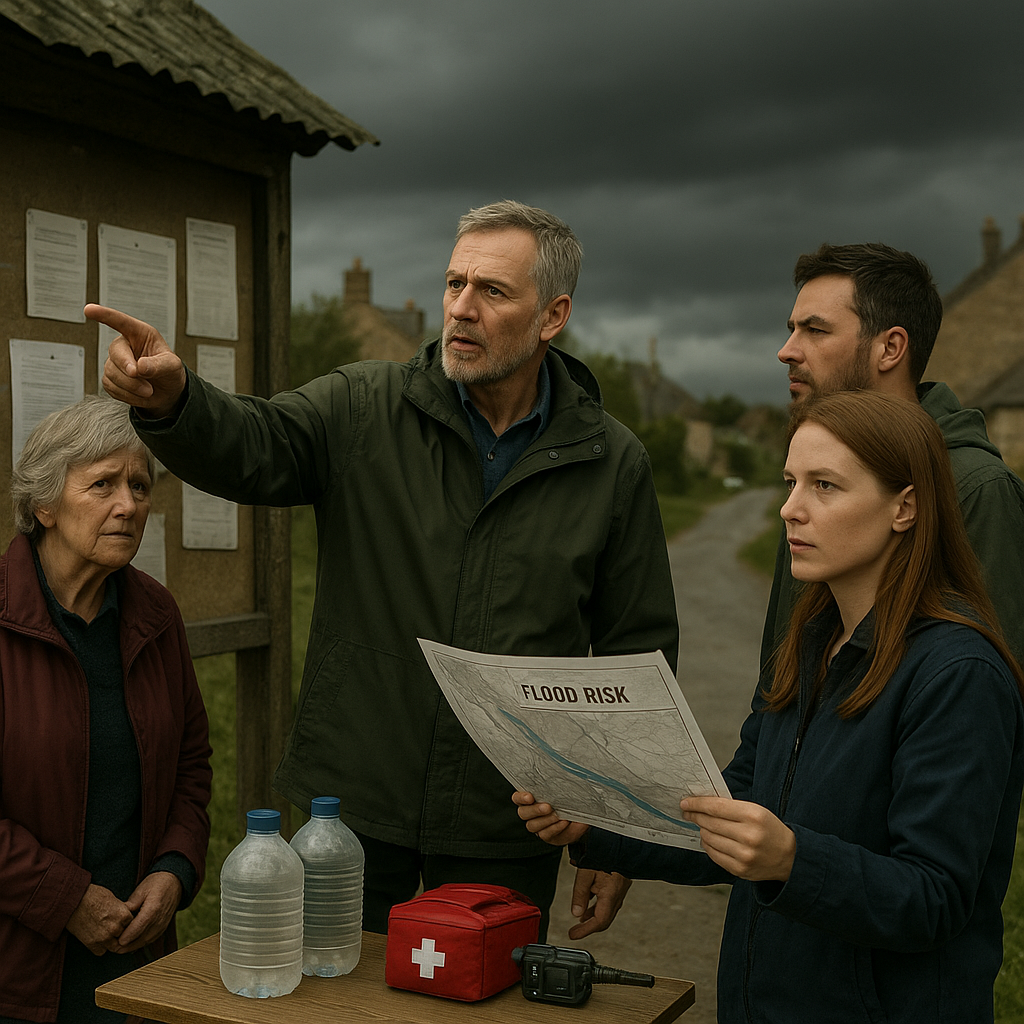
Imagine a warning of severe flooding arrives before nightfall. First, local monitors confirm what they are seeing, a trusted channel relays the alert, and residents know which signals mean they should prepare, move or seek help. This is community disaster preparedness in practice: shared information linked to clear action.
Next comes coordination. Designated contacts check on households that may need support, transport goes to agreed collection points, and residents follow a route identified in advance. Livestock and essential tools are moved only if the plan says it is safe. Improvisation should not put people at greater risk.
Then one route becomes blocked and a message fails to reach several homes. A prepared community has a backup route and another way to communicate. Leaders can also make decisions without waiting for an official who is unavailable. Preparation cannot prevent every disruption, but it can reduce the time people spend reacting without information.
After the water recedes, attention turns to recovery. Residents and agencies assess the damage, restore essential services and identify households that have lost their means of earning a living. Lessons from the response should inform the next plan, including any gaps in warning, evacuation or the protection of productive assets.
Conclusion
Community disaster preparedness does not replace government responsibility or mean local people must face every shock alone. It connects local knowledge with public resources, turning forecasts into coordinated action and relief into a more lasting recovery. Sustained community disaster preparedness depends on that partnership before, during and after a crisis.
For rural livelihoods, readiness depends on trusted warnings, practical plans, inclusive leadership and protection of the assets people rely on. When these elements work together, communities are better prepared to face the next hazard—not because the contest is fair, but because they have prepared to work as a team.