Introduction
For a rural woman without reliable access to a bank, even a small amount of savings can be hard to protect, grow or borrow against. Village savings groups offer a local alternative: members contribute regularly, build a shared fund and lend money under rules they set together. These village savings groups can make financial services more accessible close to home.
The value of the model goes beyond making cash available. At its best, it gives women more say over when they borrow, how they use the money and how financial decisions are made. This can support economic independence, though it cannot by itself overcome low incomes, unequal power within households, or limited access to markets and public services.
The key question is not simply whether a group can lend, but whether its structure helps women retain meaningful control over resources beyond the meeting room. Village savings groups are most valuable when that control extends to everyday financial decisions.
Analysis of the players: members, leaders and institutions
Members are the group’s main investors and its first line of accountability. Their contributions create a shared fund, while agreed rules determine who can borrow, how much, for what purpose and on what terms. This can make finance more accessible than a distant institution, especially where travel, documentation or minimum balances are barriers. For village savings groups, local knowledge can also help members shape lending rules around their needs.
But a community-based group is not automatically equal. Members may differ in income, confidence, family support and ability to attend meetings. High contributions can marginalise poorer women, while influential members may steer loans towards those already best placed to repay. Village savings groups work best when their rules give members with fewer resources a fair chance to participate.
Leadership is as important as the fund itself. Clear records, transparent loan decisions and regular reviews of the rules help build trust. Leaders also need ways to manage missed payments and disputes without causing public shame or damaging relationships within the group. In village savings groups, accountable leadership helps protect both members’ contributions and their confidence in the process.
Families and local institutions also shape the outcome. A woman may get a loan but have little control over how it is spent, or face pressure to use her savings for household needs. Financial independence depends not only on access to money, but also on whether she can decide how to use it and benefit from the result. Village savings groups can support that agency, but household dynamics still matter.
Key factors
First, the group’s rules need to fit members’ financial lives. Flexible contributions can accommodate seasonal earnings. A fixed schedule may be easier to manage, but harder for households with irregular incomes. A workable design balances discipline with the fluctuating cash flow common in rural livelihoods.
Loan terms also affect what community lending can achieve. Short repayment periods may suit activities with quick returns, but leave little room for farming, livestock or other investments that take time to pay off. Loan sizes and repayment schedules should reflect the purpose of each loan, rather than treating them all alike.
Second, the money needs to enable viable opportunities. Capital can help women entrepreneurs buy stock, tools or inputs, but a loan cannot guarantee customers, transport, secure land or profitable prices. Where these conditions are lacking, borrowing may add repayment pressure without reliably increasing income.
Savings matter just as much as loans. They can help cover school costs, healthcare or a poor season, reducing the need to sell productive assets or take on expensive debt. For rural savings, having a reliable place to set money aside can be especially important when income is seasonal. By protecting savings and helping members plan ahead, village savings groups can strengthen household resilience even if they do not fund a fast-growing business.
Third, women need real agency. Financial inclusion means more than membership or access to a loan: it also means having a voice in decisions and control over the resources they help create. Meeting practices, confidential handling of personal information and fair access to leadership can all affect whether participation translates into greater bargaining power. Within village savings groups, these safeguards can make participation more meaningful.
Finally, local finance has limits. A group’s fund may not meet every member’s needs, and internal lending cannot replace formal financial services, public infrastructure or protection against shocks. Links to other services can broaden members’ options, but outside support should strengthen their ownership, not take decision-making away from them. Village savings groups are one part of a wider financial system, not a substitute for it.
The match scenario
Consider a member who wants to expand a small trading activity. She saves consistently, takes a loan suited to her needs and repays it from sales. If demand is steady and she controls the earnings, the group can help her build working capital while keeping decisions close to home.
Now imagine a weak season delays sales, a household emergency redirects the loan, or repayment falls due before income arrives. The same system can become a source of strain, especially if penalties are rigid or the borrower has little say over household spending. The result depends on more than her effort: loan design, risk-sharing and the local economy all play a part.
Village savings groups are therefore better understood as shared financial infrastructure than as a quick route to entrepreneurship. Their gains may be gradual: building a reserve, repaying a loan without selling assets, or gaining more influence over decisions. These outcomes may be less dramatic than a sudden rise in income, but they can make future choices more secure.
Conclusion
Village savings groups can widen access to finance through regular saving, local knowledge and shared rules. They can help rural women manage risk, invest in their livelihoods and strengthen their position within households and communities.
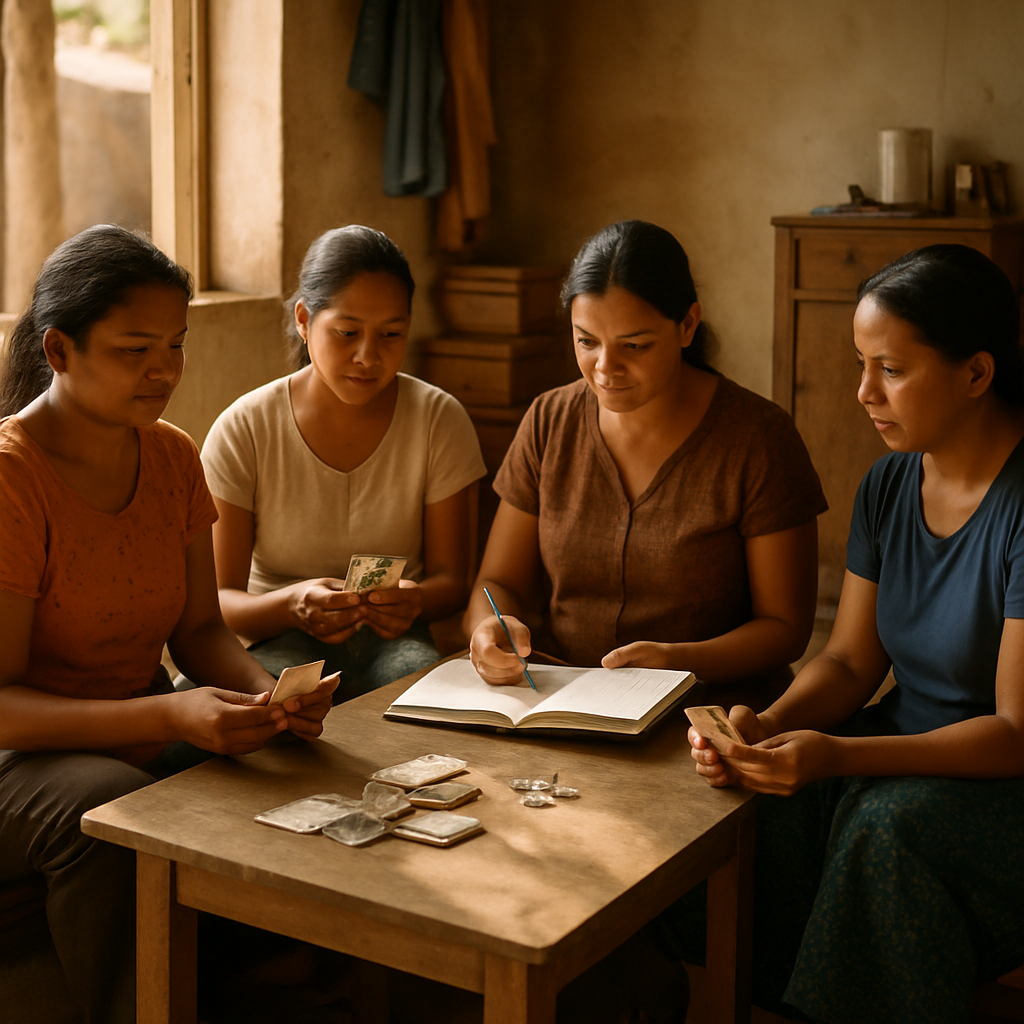
But their impact depends as much on the quality of participation as on the size of the fund. Fair governance, suitable loan terms and women’s control over savings and returns are crucial. When these conditions are met, even a modest pool of money can become a platform for making economic choices on women’s own terms.