
Low-Cost Soil Restoration for Smallholder Farms
Introduction
For smallholder farmers, soil decline is not an abstract environmental problem. It means smaller harvests, fields that dry out quickly, or heavy rain washing topsoil downhill. Reversing these losses rarely requires one expensive input. More often, it takes a series of manageable decisions made over several seasons. In smallholder farming, practical improvements must also fit the household’s available time and resources.
Soil restoration aims to rebuild the soil’s ability to hold water and cycle nutrients using materials and labor already available. Progress can be slow, and results depend on climate, soil type and access to land. Still, several affordable practices can reduce risks and improve a field’s productive potential. This gradual approach makes soil restoration more achievable for farms with limited budgets.
Rather than copying a model farm or buying a package of amendments, start by identifying the main problem on a particular plot. Then choose a solution the household can maintain. Affordability includes time, transport and reliable access to biomass—not just the price of an input. A soil restoration plan should reflect these local constraints from the start.
Residues, roots and livestock
Crop residues are often the most readily available resource. Leaving stalks, leaves or husks on the soil surface can soften the impact of rain, slow evaporation and reduce erosion. But residues may also be needed for feed, fuel or construction. Deciding how much to leave is a trade-off, not a matter of removing everything from household use. For soil restoration, even partial ground cover can be a useful first step.
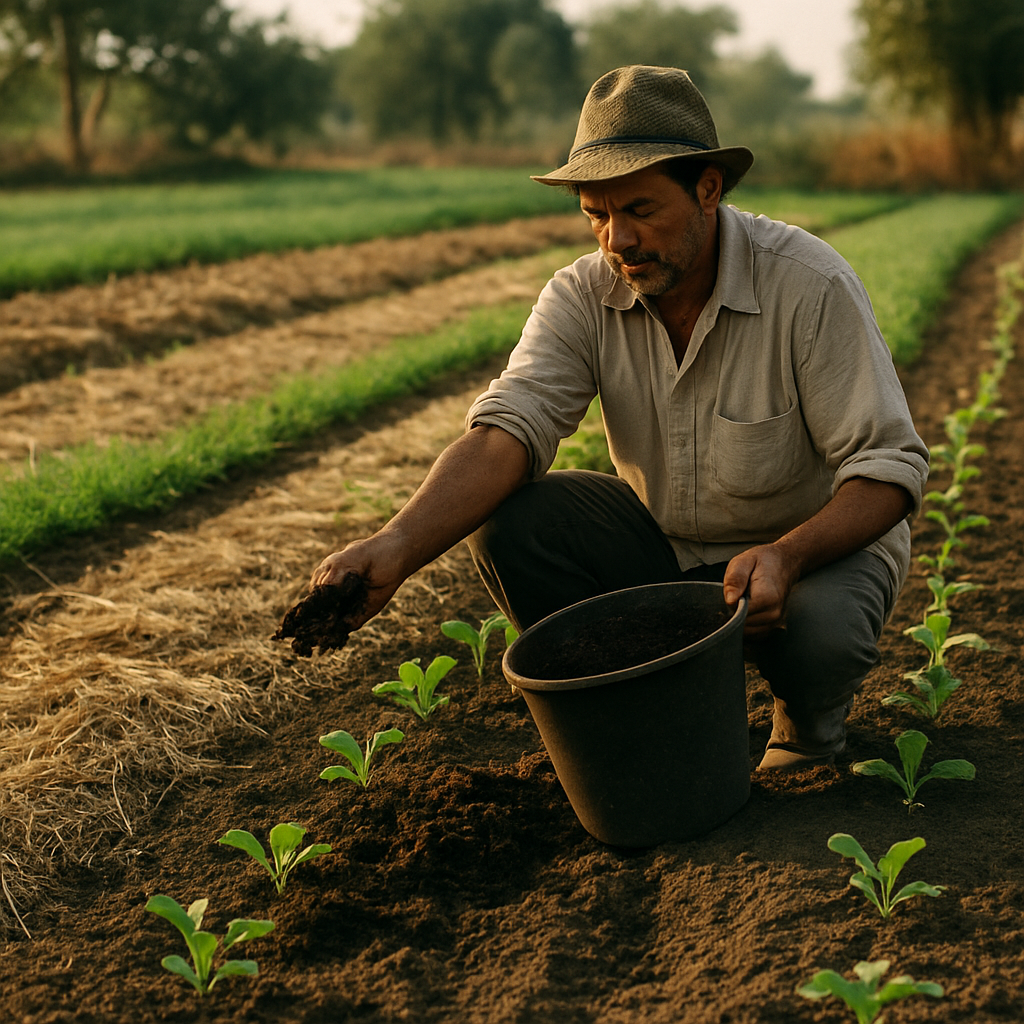
Composting turns plant material and manure into a more stable source of organic matter and nutrients. A small, well-managed heap can be more useful than a large pile that dries out, becomes waterlogged or loses nutrients in runoff. Mixing different materials, keeping the pile slightly moist and allowing enough time for decomposition matter more than following a perfect recipe. Soil restoration through composting works best when the finished material is applied where it can provide the greatest benefit.
Cover crops protect the soil with living roots between cash crops. Legumes can add nitrogen when the species, soil conditions and management are suitable. Grasses can provide dense ground cover and extensive roots. The right choice depends on local conditions: the crop must fit the rainfall pattern, rotation and household needs without competing with the main crop for scarce water.
Livestock can help return nutrients to the soil when manure is collected and applied carefully. Fresh manure may damage plants or carry pathogens. Unmanaged grazing can leave soil exposed and concentrate nutrients near shelters. Managed grazing and composted manure help make livestock part of a restoration system rather than a source of uneven pressure.
These practices work well together. Residues protect the soil surface, roots hold it in place, compost adds organic matter, and livestock can return nutrients. Their value depends on how they complement one another—and whether the farmer can maintain them through a difficult season.
Key factors
Start with the problem causing the greatest losses. If water runs off quickly, contour planting, grass strips, bunds or small stone lines may slow it down. If the soil is bare and crusted, mulch and reduced disturbance may be a better first step. Erosion control is especially important on slopes, where lost topsoil is difficult to replace. Well-chosen measures can make soil restoration more effective by addressing the source of ongoing losses.
Water management must suit the site. A barrier that slows runoff on one slope could cause waterlogging or harm land downstream if it is poorly placed. After rain, observe where water enters the field, where it gathers and where sediment settles. Local extension workers or experienced neighbors can help assess structures before they are expanded.
Soil fertility cannot be judged by appearance alone. Darker soil may contain more organic matter, but crop growth also depends on nutrients, acidity, drainage and rainfall timing. Where a basic soil test is affordable and available, it can help prevent spending scarce resources on an unnecessary amendment. Without a test, try changes on small plots rather than treating the whole farm based on guesswork.
Compost is useful, but it is not a complete fertilizer. Its nutrient content varies with the ingredients and how it is handled, and it may not provide enough of a particular nutrient for a demanding crop. In some cases, combining organic matter with targeted mineral inputs works better than choosing one or the other. Match the input to the crop and field rather than following a slogan.
Labor can also limit what is practical. Digging, carrying biomass and building barriers may compete with planting or harvest work. A method may be technically sound but still fail if it demands too much at the wrong time. A small trial can show whether it fits the household’s schedule and whether the benefits justify the effort.
Regenerative agriculture is sometimes presented as a complete system, but small farms may need to make changes gradually. A farmer could leave more residue on one plot, try a cover crop on another or compost manure near the fields that need it most. This spreads risk and makes it easier to compare new practices with current ones.
Tracking results need not be complicated. Note planting dates, yields, labor, purchased inputs and visible runoff. Where possible, compare treated strips with untreated ones. Changes in soil structure and organic matter take time, so one season may not provide a clear answer. Consistent records can help separate real progress from the effects of a good or bad year of weather and guide future soil restoration decisions.
A season in the field
Imagine a small sloping plot where heavy rain washes soil from the upper rows and crops struggle during dry spells. Before planting, the farmer traces the water’s path and installs a modest grass strip or contour barrier where runoff is strongest. The aim is to slow the water safely, not block it without providing an outlet.
After harvest, some residues are left as cover, while the household keeps what it needs for feed. Manure and suitable plant waste go into a compost heap. If the rainfall and rotation allow, the farmer tests a short-duration cover crop on part of the plot and leaves a nearby strip under the usual practice for comparison.
By the next harvest, success may not look dramatic. Signs of progress could include less sediment below the field, better crop survival during a dry spell or less need for purchased inputs. If the cover crop competes for water or the barrier redirects runoff poorly, the farmer can adjust the plan. Soil restoration depends on observation and adaptation, not a fixed playbook.
Conclusion
Affordable soil improvement relies on local resources, careful timing and practices suited to the field. Mulch, composting, cover crops and erosion control can support one another, but each comes with trade-offs. Results depend on rainfall, labor, livestock needs and the crops a household must grow.
The most practical approach is selective and measurable: address the biggest source of soil loss, test changes on a manageable scale and keep what works. For smallholder farms, gradual gains in soil cover, water retention and nutrient cycling are more realistic than promises of instant renewal. The land improves when the system works for both the farmer and the soil.