
Building Local Food Processing Businesses to Create Jobs and Reduce Post-Harvest Losses
Introduction
Harvest is not the finish line. In many farming communities, it marks the start of a race against heat, distance and poor storage. Crops that took months to grow can lose value before reaching a buyer. Local processing can help bridge the gap between what farms produce and what markets can absorb.
Rural food processing turns crops into products that last longer, travel more easily or meet local demand in a different form. Milling grain, drying fruit, pressing oil and chilling milk may not seem glamorous. But well-run rural food processing businesses can preserve food, widen market access and create jobs close to where crops are grown.
That does not mean every village needs a factory. Rural food processing creates lasting value only when supply, equipment, skills and buyers align. The key question is whether a business can turn seasonal abundance into reliable revenue without placing too much risk on farmers or workers.
Analysis of the teams and players
Producers are the first link in the chain. Smallholders often have little bargaining power when many farms harvest at once and buyers know fresh produce spoils quickly. Rural food processing can offer another route to market, but only if farmers have reliable buyers and clear payment terms.
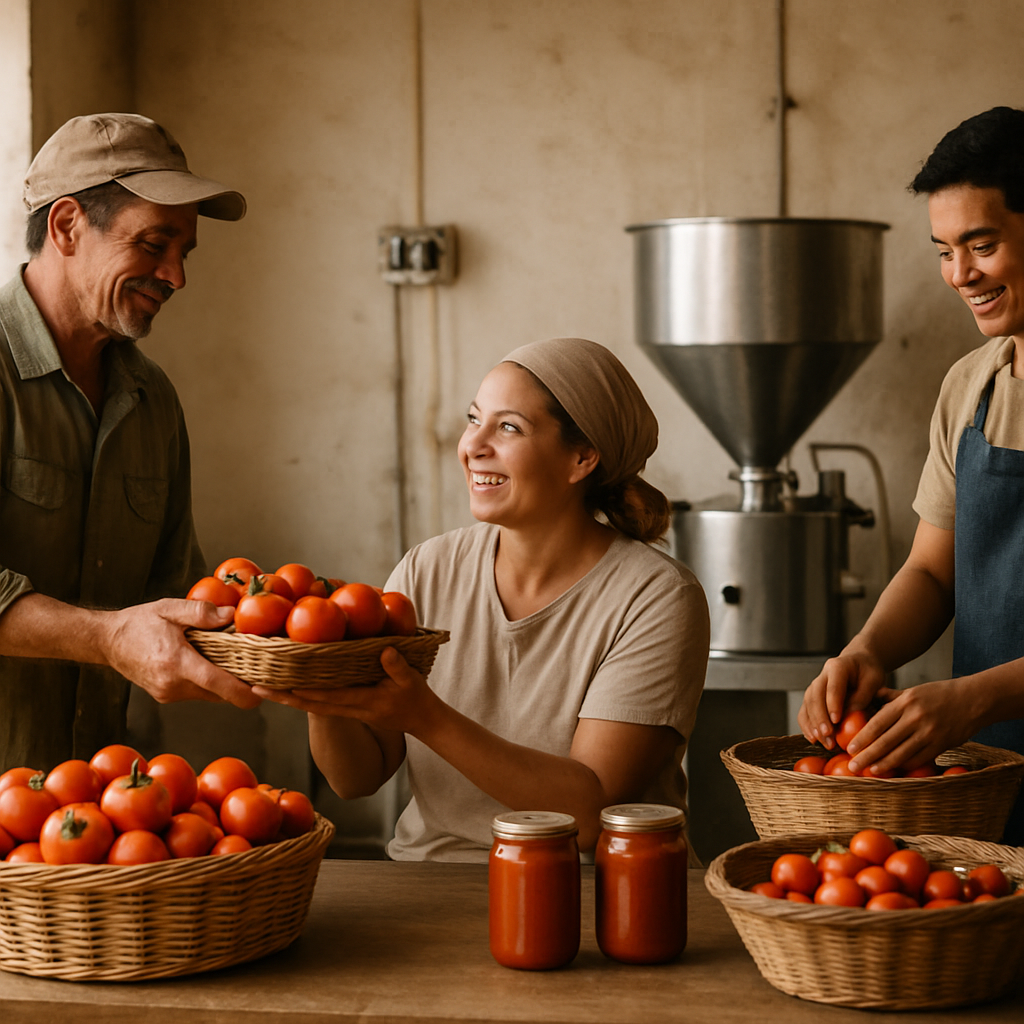
Farmer groups and cooperatives can help make that possible. By pooling crops, they give processors the volume and consistency needed to keep equipment running. Members, in turn, can negotiate grades, collection schedules and prices together. Without these arrangements, a rural food processing plant may sit idle while farmers sell to whoever arrives first.
The next link is the business itself: owners, managers, machine operators and quality-control staff. They must produce safe, consistent goods at a price customers will pay. Buying machinery is only the first step. Maintenance, food-safety procedures and working capital determine whether a rural food processing business can keep operating.
Local authorities, lenders and technical colleges can support the business, but they cannot replace sound commercial management. Roads, reliable power, water and clear licensing requirements can lower costs. Training can build skills in equipment repair and food handling. Credit is also important, especially when processors must buy crops at harvest and wait weeks or months for retailers to pay. This support can help village enterprises establish sustainable rural food processing operations.
Buyers are the final link. Households, shops, schools, restaurants and distributors have different needs for pack sizes, prices and standards. A processor is more likely to succeed if it first learns what local food markets buy, rather than investing in machinery and hoping demand will follow.
This approach is also reflected in research on local food systems as a foundation for community and economic development. The goal is not simply to keep every transaction nearby, but to connect local supply with viable businesses and reliable demand.
Key factors
The first decision is which crop to process and how. A crop may be abundant but hard to store, costly to transport or unfamiliar to buyers. Before investing in rural food processing, a feasibility study should examine harvest calendars, seasonal volumes, where spoilage occurs, existing competitors and likely selling prices.
This groundwork helps ensure processing adds value rather than becoming an end in itself. Drying, freezing, fermenting and milling can all increase a crop’s value, contributing to agricultural value addition, but each has different costs, energy needs and quality requirements. The best option is usually the simplest process that addresses a clear market need and can be run consistently.
Post-harvest loss reduction starts before produce reaches the processing line. Better crates, shade, sorting, collection routes and basic storage can protect quality and reduce rejections. Rural food processing cannot save every damaged or contaminated crop, so prevention and processing should be planned as part of the same chain.
Scale is another important decision. Large plants may have lower costs per unit, but they require steady supplies, significant investment and reliable utilities. Smaller village businesses can be closer to farms and customers, but may struggle to afford repairs, meet formal standards or secure good transport and packaging rates. These smaller rural food processing ventures can still serve a valuable role when they are matched to local supply and demand.
Neither model is always better. Shared facilities, mobile processing units and networks of small operators can spread equipment costs, but they need clear coordination. Someone must schedule use, maintain machinery, buy inputs and enforce quality standards. Without clear responsibilities, shared infrastructure can become nobody’s asset.
Financing must fit the agricultural cycle. Processors often need cash to buy large volumes of crops during a short harvest, while sales revenue comes in over a longer period. Loans with monthly repayments may not suit this pattern. Seasonal credit, patient capital and transparent contracts may be more useful than a larger loan with poor timing. Well-planned rural food processing can then help improve smallholder incomes while managing seasonal cash flow.
Claims about job creation also need scrutiny. Rural food processing businesses can employ people in production, packaging, logistics, sales and maintenance, but the number of jobs alone does not show whether they are stable or fairly paid. Training, safe working conditions and clear routes into skilled roles help make local employment more sustainable and build rural jobs.
Women and young people should have opportunities across the value chain, not just in low-paid sorting and packaging roles. Access to ownership, technical training, finance and leadership affects who benefits from the new value. Without it, a business may reduce crop waste while leaving existing inequalities unchanged.
It is also important to ask who receives the margin between the farmgate and final sale. Transparent grading and pricing can help smallholder incomes rise alongside processor revenue. If farmers bear the risks of inconsistent supply while buyers set prices and reject produce without explanation, the business rests on an unstable relationship.
Match scenario
Imagine a district where fruit floods the market during a short harvest, leaving little time to sell it fresh. The first step is not to install a large production line. Instead, a rural food processing business can test demand with a small drying operation, agree on supply with farmer groups and find shops or institutions willing to buy a consistent product.
During the first season, the focus is on execution: collection points near farms, clear quality standards, prompt payment and careful tracking of energy and packaging costs. Operators record what gets rejected and why, while sales staff test different pack sizes and prices. These practical details show whether the model is viable.
If demand is strong, the business can expand carefully in the next season by adding drying capacity, extending the buying period or making a second product with the same equipment. If sales are slow, it can adjust the product or volume before debt and idle machinery become a burden. Progress depends not on how much capacity is installed, but on whether it is used profitably.
The broader choice is between a seasonal economy that sells quickly at a discount and one that can preserve, process and sell crops over time. Technology alone cannot guarantee success. Farmers, rural food processing businesses and buyers must keep the chain supplied, trusted and commercially viable in both good and bad harvests.
Conclusion
Local processing can connect farm output with economic activity throughout the year. It can reduce waste, support rural jobs and keep more value near producers, but only if the business is built around demand, fits the local crop calendar and has the finance and skills to operate reliably. Rural food processing can contribute to resilient local food markets when producers and processors coordinate around what customers need.
The strongest model will not always be the largest plant or the newest machine. Success depends on the fundamentals: dependable sourcing, suitable technology, safe products, fair contracts and returning customers. Build those relationships first, and rural food processing can become a lasting part of rural economic life—not just a way to deal with surplus.