
Community Irrigation: The Rules Behind a Reliable Harvest
Introduction
Water infrastructure can support a harvest, but it cannot guarantee one. Between a canal intake and a farmer’s field, people must decide when water is delivered, how the system is maintained and how supplies are shared when they run short. These decisions determine whether community irrigation works in practice or remains just a network of channels.
Local management is not automatically fair or efficient. But farmers who depend on the same water often know where deliveries fail, and they have a direct stake in keeping the infrastructure usable. The challenge is to turn that knowledge into rules people trust and can enforce. Strong community irrigation depends on combining local experience with transparent, workable decisions.
For smallholders, missing an irrigation turn can affect more than one field. A reliable schedule helps households plan planting and labour, but only if it reflects both the available supply and the needs of users at different points along the canal. For this reason, smallholder irrigation works best when schedules are shaped with farmers’ direct input.
Analysis of the sides in the contest
Farmers, often organised into water user groups, bring local knowledge. They can spot blocked channels, leaks and uneven deliveries faster than a distant agency. But local power differences can also shape who gets heard, whose fields are prioritised and whether decisions can be challenged. Effective community irrigation makes room for different users to raise concerns and influence decisions.
Farmers at the head of a canal may feel confident about their access, while those farther downstream may find that water arrives late or not at all. Records of total withdrawals alone can hide this gap. Fair management must track when water reaches each user, not just how much enters the network. This kind of monitoring is essential for equitable water access in community irrigation systems.
Local leaders coordinate the system, but they do not own the water. Clear mandates, public records and a process for replacing representatives can help prevent allocation decisions from becoming private arrangements. Leaders earn trust when members can see how decisions are made.
Public agencies also have a role. Community management cannot replace technical support, major repairs or clear legal rights to use water. The most durable approach is usually shared: farmers handle routine decisions and maintenance, while government institutions provide oversight and help when problems exceed local capacity. Such partnerships can strengthen community irrigation without taking control away from users.
Women, tenants and households with less land may rely on irrigation but have little say in how it is managed. Participation matters only when these users can influence schedules and budgets, not just attend meetings. Representation is meaningful when it changes whose needs shape the final allocation. Rural participation is therefore a practical requirement for fair community irrigation, not simply a formal process.
Key factors
First, rules must hold up during a dry spell. Allocation criteria should be clear before water becomes scarce, with agreed procedures for rotations, shortages and disputes. Vague rules give the strongest users room to gain an advantage when others can least afford to miss a turn.
Second, decisions and records should be open to all members. Shared information about water supplies, schedules, maintenance costs and decisions gives people a common basis for discussion. It cannot prevent disagreement, but it can help distinguish a genuine shortage from a failure to follow the schedule. Openness also supports local resource management by making responsibilities and results visible.
Third, maintenance needs clear responsibilities: who inspects the system, who contributes labour or fees, and how repairs are prioritised. Contributions should also take account of households with limited time or money. In community irrigation, agreed maintenance plans help protect shared infrastructure between seasons.
Fourth, access should be fair across the network. Equal turns on paper may not mean equal deliveries: distance, channel condition and timing all affect how much water reaches a plot. Checking deliveries at different points helps groups adjust rules instead of assuming that an equal schedule is fair. These adjustments can help community irrigation deliver more reliable harvests across the network.
Fifth, rules need to adapt without favouritism. Cropping patterns, rainfall and water supplies change, making fixed schedules impractical. But informal changes can erode trust. A clear process for revising schedules allows users to adapt while keeping decisions visible and accountable.
Finally, local management needs more than goodwill. Users need enough information to estimate supplies, understand the infrastructure and resolve conflicts. When technical questions go beyond their expertise, outside advice should support community decisions, not replace them. This balance helps community irrigation remain locally accountable while drawing on specialist knowledge when needed.
Match scenario
Think of the season as a contest between water supply and demand, with the distribution system setting the pace. At the start, groups agree on rotations, identify vulnerable sections of the canal and assign responsibilities. The first test comes when delays begin: do people follow the plan? In community irrigation, preparation can make the difference between a manageable delay and a conflict.
If deliveries are uneven, a trusted group can compare reports from upstream and downstream farmers, inspect the channel and explain any changes. This may keep a delivery problem from turning into a dispute over intent. If complaints are ignored, even a temporary shortage can make it seem that the rules favour certain users.
When supplies tighten, transparent rotations can spread shortfalls and make trade-offs clear. Opaque decisions, by contrast, encourage bargaining outside the agreed process. No management system can create water, but it can determine whether people manage scarcity together or leave its costs to the least powerful farmers.
At harvest, the best-served fields are not the only measure of success. More revealing questions are whether deliveries were predictable, disputes were handled fairly and the network remained usable. Credible rules help farmers plan for a more reliable harvest, even though weather and other risks remain.
Conclusion
Community irrigation is neither a quick fix nor a guarantee of equal outcomes. It depends on practical arrangements: representative water user groups, open information, enforceable schedules, shared maintenance and institutions that can help when local capacity is stretched.
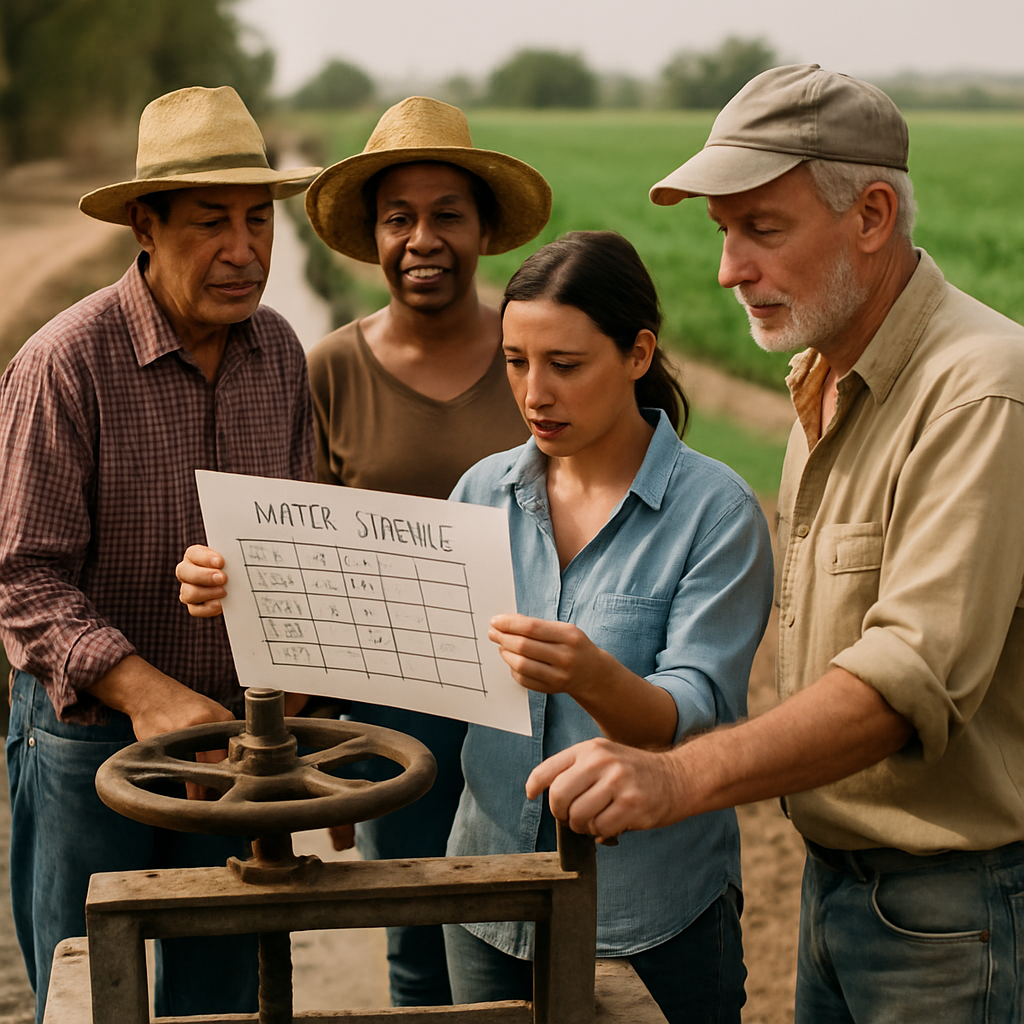
Success does not mean every user receives exactly the same amount in every season. It means decisions can be explained, participation is real and shortages do not repeatedly burden those with the least influence. When these conditions are met, shared management can make water access fairer and harvests more dependable. With inclusive rules and consistent oversight, community irrigation can support reliable harvests while strengthening trust among users.