
Taking a Cooling-Off Break: Which Activities Does the Restriction Cover?
Introduction
A cooling-off break may sound like a simple pause, but its scope depends on the operator’s rules. A name such as Rajbet does not, by itself, tell customers which products will be unavailable. The key question is not just how long the break lasts, but what it prevents them from doing.
There is no single definition across all platforms and jurisdictions. One operator may block new bets on both its sportsbook and casino, while another may apply a narrower restriction. Deposits, promotions and existing wagers may also be treated differently. The terms for the specific break are more informative than the label alone.
Understanding the scope beforehand helps avoid surprises. Someone expecting a full account freeze may find that one product is still available. Someone who only wants to stop wagering may not expect routine account functions to be affected.
How restrictions affect players and platforms
For customers, the main concern is whether they can still place a bet or access another product that offers a similar way to keep playing. A restriction limited to sports betting may leave casino games or other real-money products available on the same account. An account-wide break, by contrast, may block several sections at once.
Operators need to explain restrictions clearly and apply them consistently. Blocking one channel while leaving another open can be confusing, especially when products share a wallet, login or promotional system. The platform’s design can shape the practical effect as much as the policy wording.
Existing bets raise a separate issue. A cooling-off setting may stop new wagers without cancelling accepted bets, changing their terms or preventing settlement. Customers should check the rules to see what happens to open bets and related funds; an active restriction does not necessarily reverse a wager already placed.
Account access also varies. Some restrictions block wagering products but leave statements, account settings and support available. Others may limit broader account use. A cooling-off break is not the same as account closure, and closing an account may not have the same effect as a temporary restriction.
Key factors
First, check which products are covered. Look for specific references to sports betting, casino games, live betting, virtual products and other real-money services. If the terms name only one product, do not assume the restriction applies to every section of the account.
Second, check which actions are blocked. The restriction usually focuses on participation, but the terms may separately address placing or editing bets, deposits, withdrawals, transfers and promotional offers. Promotions matter too: they may encourage activity even when direct wagering is restricted.
Third, confirm the timing. The break may start immediately or after a short processing period. Access may not return exactly as expected when it ends: the customer might have to wait for the full period to pass, and rules may vary on whether a break can be shortened, extended or renewed.
Fourth, distinguish a cooling-off break from self-exclusion. These can be different tools, with different durations and procedures depending on the provider and local rules. A temporary pause may not be enough if the intention is to prevent access for longer.
Finally, read the exceptions. The operator’s rules may explain how unsettled bets, account balances, withdrawals, identity checks and customer support are handled. These details show whether the break blocks only new activity or affects wider account use.
Match scenario
Imagine a customer starts a cooling-off period shortly before a major match. They have an accepted wager, a balance in their account and access to several product areas. Once the restriction begins, they may be unable to place another bet while the existing wager remains open until the event is settled.
If the break covers only the sportsbook, other real-money products may still be available. If it applies account-wide, they may be blocked too. Deposits could be disabled while withdrawals or transaction records remain accessible. Customers should check the platform’s policy rather than assume how these features will work.
During the match, the difference between an existing wager and a new one becomes especially important. A restriction on fresh bets may leave an existing wager exposed to the result. The break limits what the customer can do next; it does not necessarily change what has already happened.
When the chosen period ends, access may return according to the operator’s process, and not every feature will necessarily be restored at once. Customers should check whether access resumes automatically, whether confirmation is needed and whether other account limits remain in place. Clear expectations matter more than the timing of the match.
Conclusion
A cooling-off break is not a universal switch with fixed effects. It may restrict new bets, multiple product categories, deposits, promotions or account access. The exact scope depends on the operator’s rules and applicable requirements.
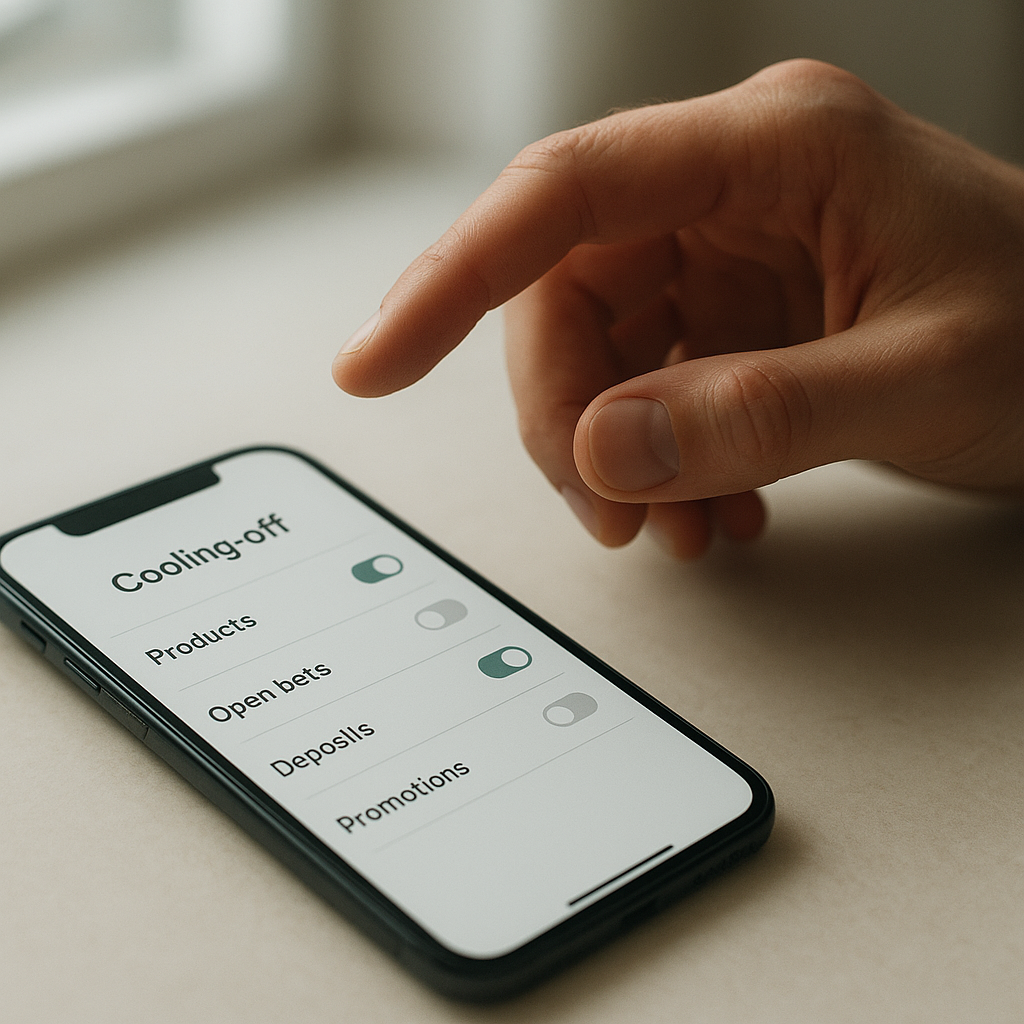
Before relying on a break, check which products it covers, what happens to existing bets and funds, and how the restriction starts and ends. That helps ensure the pause matches the customer’s intention rather than only appearing to do so.