
Diversifying Farm Income With Agroforestry and Tree Crops
Introduction
A farm built around one main crop has a clear advantage: land, labour and management can follow a familiar production cycle. But this also concentrates risk. A poor harvest, falling prices or a pest outbreak can affect much of the year’s income at once.
Agroforestry systems offer another way to manage that risk. Combining trees with crops or livestock can add products and spread income across the year, while changing how land handles water, wind and heat. But more species do not automatically mean greater security. The right approach depends on markets, land, labour and how long a household can wait for returns.
Analysis of the contenders
An established annual crop often brings income within a single growing season. It may also have reliable buyers, equipment and local expertise behind it. For farmers with tight cash flow, that quick return matters: a long-term plan cannot replace the money needed for this year’s seed, food or school costs.
Tree crops offer a different income profile. Fruit, nuts, timber, fuelwood and other locally suitable products can add revenue, but trees may need several years of care before they produce substantial returns. Their value depends on the species and variety, spacing, harvest timing, quality standards and access to buyers. In agroforestry systems, planning for this delay is essential.
Agroforestry systems combine trees with annual crops, pasture or livestock rather than acting as a universal third crop. The right mix depends on farm conditions. Trees may provide products for sale, or contribute shade, fodder, wind protection and better soil management. These benefits can support farm income even when they do not generate a separate sale.
Diversification should be judged by more than the number of products. Farm diversification can spread risk, but adding a slow-maturing crop at the expense of a reliable staple can leave a household more exposed. A sound plan preserves enough dependable production to meet immediate needs.
Key factors
Time is the first constraint. Agroforestry systems and annual crops follow different schedules, so plans must account for the years before trees produce and the chance that yields or prices will disappoint. Phased planting limits how much land is taken out of production at once and gives farmers time to learn which species and practices suit local conditions.
Land design matters too. In agroforestry systems, tree density, canopy, roots and placement can affect light, water, and access for machinery or livestock. Poorly chosen combinations may compete with crops, while well-planned layouts can make productive use of field boundaries, slopes or underused areas. Local trials and advice are important because results vary with soil, rainfall and management.
Markets determine whether potential yields become income. Products from agroforestry systems may include perishable fruit that needs quick transport, grading and storage. Nuts or timber may require processing, aggregation or a buyer willing to accept small volumes. Before planting, farmers need a clear route to market: who will buy, what quality they expect and when income will arrive.
Cash flow and labour go hand in hand. Establishment costs come before returns, and trees need ongoing care, including pruning, protection, pest management and harvesting. This work can compete with other farm tasks and may not be shared evenly within a household. A realistic assessment of profitability should include labour, transport and maintenance, not just sales.
Adding a new source of income does not eliminate risk. A diverse farm can still be vulnerable if its products depend on the same weather patterns or buyer. Different harvest periods and uses can spread exposure, but price, disease and climate risks remain. Choosing species suited to local conditions matters more than diversity for its own sake.
Environmental benefits can strengthen the economic case, but they depend on good management. Well-managed agroforestry systems may reduce erosion, protect soil from heavy rain and add organic matter, supporting soil conservation. In some systems, shade and windbreaks can also improve conditions for crops or livestock. Poorly matched plantings, however, may compete for scarce water or reduce yields.
Climate resilience is a practical matter, not a slogan. Agroforestry systems may buffer some stresses and provide products from different parts of the farm, but they cannot guarantee a harvest through severe drought, fire or extreme heat. Resilience is strongest when trees are combined with water management, soil care, suitable planting material and plans for unusually bad seasons.
For smallholder livelihoods, access to support can matter as much as the planting plan. Secure land rights, finance suited to a long establishment period, reliable seedlings, technical advice and producer organisations all affect whether households can make the investment. Without this support, the costs and wait for returns may put agroforestry out of reach.
Match scenario
The strongest approach is a measured transition, not an all-in switch. A farmer keeps the core crop that pays immediate bills, trials a few suitable tree species and expands only after assessing their performance and the reliability of buyers. A phased approach to agroforestry systems can place trees where they complement rather than displace the existing system, with the design adjusted as experience grows.
A weaker approach is to plant trees based on promised future returns without a clear market or enough resources for maintenance. If trees take land and labour from reliable crops but fail to produce a saleable harvest on time, the household may face several lean seasons. This risk is greatest when farmers have little access to credit or cannot absorb delayed returns.
There is no single best combination. A diversified farm might include annual staples, fruit or nuts, livestock and trees that protect the land. The right balance depends on household priorities and local ecology. What matters is whether the system stabilises income without creating costs the farm cannot carry.
Conclusion
Agroforestry systems and tree crops can make farm income less dependent on a single harvest, buyer or season. They work best when marketable products are combined with benefits such as soil conservation, while allowing for the time, labour and planning these systems require.
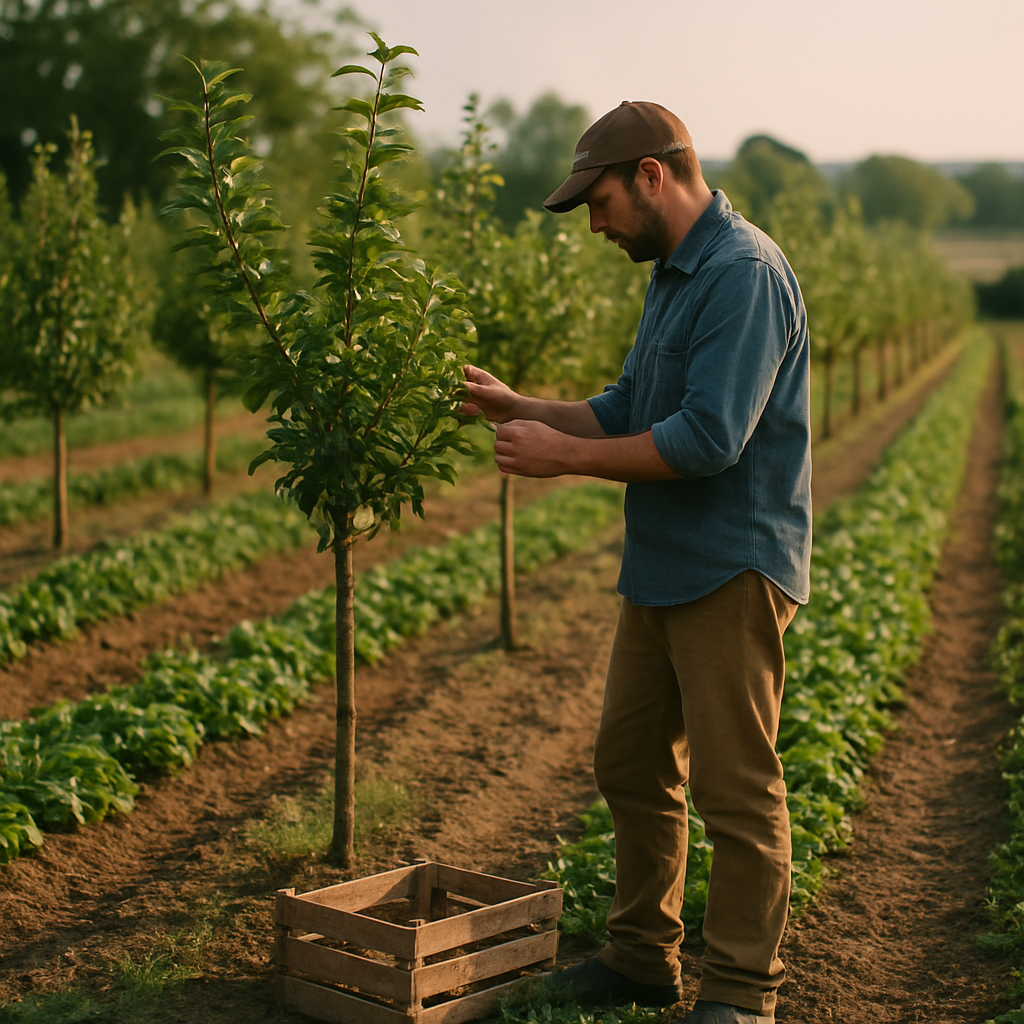
The outlook is cautiously positive. Diversification works best when it is tested locally and introduced at a pace farmers can finance and manage. Trees can broaden a farm’s options, but sound design, dependable markets and protection of near-term income determine whether that potential becomes lasting security.