
Drought-Resilient Crops That Protect Small Farm Incomes
Introduction
For a small farm, drought means more than a lost harvest. It can leave a household with less food, fewer animals to sell and no money for seed or school fees next season. One failed crop can limit a family’s options for months.
Drought-resistant crops can reduce these risks, but not eliminate them. Their value depends on local soils and rainfall, reliable access to seed and demand for the harvest. The best approach is to treat crop choice as part of a farm’s income plan, not as a miracle solution.
The contenders: crops and farm systems
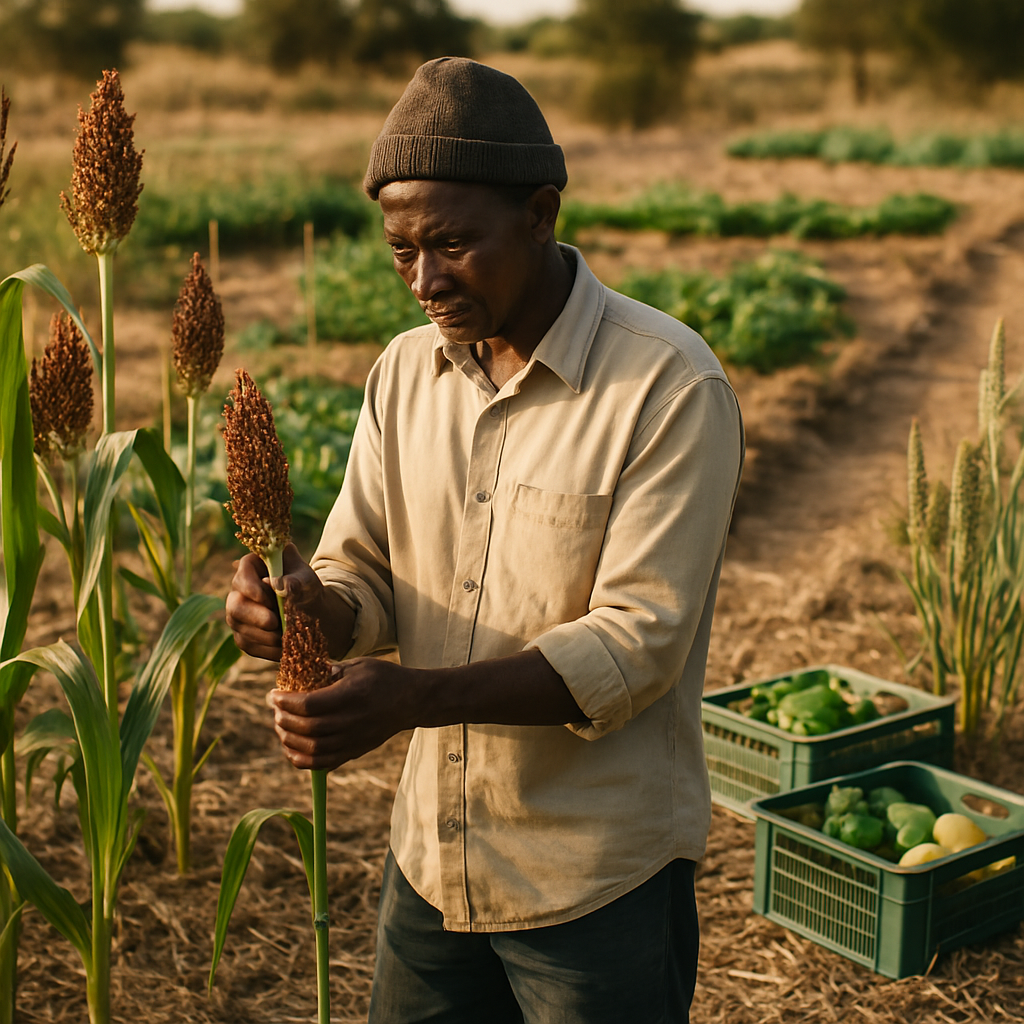
Sorghum and millet are common choices in dry regions because they can grow in conditions that challenge more water-demanding cereals. These drought-resistant crops are not immune to drought: prolonged heat or severe water shortages can still reduce yields. But well-adapted local varieties may give farmers a better chance of harvesting something.
Legumes such as cowpea and pigeon pea can provide another source of resilience. These drought-resistant crops offer food or a crop to sell, and including them in a rotation can support soil fertility. Their performance depends on the variety, pests, planting dates and rainfall. Farmers should draw on local experience rather than assume that legumes always thrive in dry conditions.
Cassava can be useful where the climate is suitable and farmers have access to planting material and buyers. As one of several drought-resistant crops, it can remain in the ground after maturity, giving households more flexibility over when to harvest. That can help when rainfall, labor or market prices make an immediate harvest difficult. Cassava is still vulnerable to pests and disease, and poor storage or processing can cause losses.
Often, the best choice is not one crop but a mix. This kind of crop diversification can include drought-resistant crops with different maturity dates and uses to spread risk: if one harvest fails, another may still provide food or income. A portfolio might include a staple, a legume and a crop that can be harvested or sold at another point in the season.
The mix must suit the farm. A household with limited labor may struggle to manage many crops, while farmers far from buyers may find it hard to sell an unfamiliar harvest. Drought-resistant crops protect income only when growing, storing and marketing them are practical.
Key factors
The first factor is how well a crop suits the local conditions. Soil depth, temperature, rainfall patterns and the length of the growing season can matter as much as a crop’s reputation for hardiness. Farmers need seed varieties tested in similar conditions, including drought-resistant crops suited to local soils, along with information on maturity and likely performance in both dry and favorable years.
Access to seed can be a major barrier. If an adapted variety is unavailable, too expensive or sold without reliable information, its potential benefits may never reach the field. Community seed systems, extension advice and transparent trials can help farmers compare options before planting a large share of their land.
Water scarcity also makes farming practices important. Soil cover, erosion control and added organic matter can help the ground retain moisture. Timely planting can make better use of the rain that falls. These measures take labor and may compete with other demands, so advice should reflect what a household can manage.
Climate-smart agriculture works best when it connects these choices rather than treating seed as a stand-alone solution. Soil management, weather information, planting schedules and pest control can reinforce one another. But practices that work in one district may not suit another, so farmers need room to adapt them.
Markets matter just as much. Drought-resistant crops may withstand dry conditions but still bring little income if buyers are scarce, prices fluctuate or storage losses are high. Local demand, transport costs, processing options and the timing of sales all affect whether a new crop can strengthen farm income and farm income stability.
Changing crops also carries risks. Replacing a familiar crop too quickly can leave a household without a reliable food source or buyer. New seed and equipment may also require money before any returns arrive. Trying a crop on part of the farm can limit exposure, as long as it does not reduce essential food production.
The season’s decisive scenario
Imagine a season when the rains start late and the weather turns dry while crops are growing. A farm planted with a single water-sensitive staple faces concentrated risk: the same conditions can damage most of the expected harvest. The household may then have little to eat or sell and may need to buy food when supplies are tight.
A diversified farm faces a different, though not guaranteed, outcome. Drought-resistant crops such as a locally adapted cereal may handle a dry spell better; a legume may provide a separate harvest; and crops with different maturity dates can spread the timing of food and income. The year may still be difficult, but losses are less likely to come all at once.
The outcome depends on decisions made throughout the season. Seed choice, planting dates, soil condition and available labor affect what survives. Storage and access to buyers determine what can be turned into income. If drought affects a whole region, even a good harvest may sell for less or be difficult to transport.
Resilience should therefore be judged by more than yield in one dry year. Farmers also need to consider seed costs, labor, food value, market access and performance over several seasons. For a household short on cash, a modest but reliable harvest may be more useful than a higher potential yield with greater risk of failure.
Conclusion
Drought-resistant crops can help small farms cope with unreliable rainfall, but no crop can guarantee a harvest or protect income on its own. They work best as part of a locally adapted system that spreads risk, helps soil retain moisture and connects production to a real market.
For households with little room to recover from a failed season, the practical question is simple: will this crop improve the farm’s options without creating new financial or food-security risks? Local evidence can help farmers answer that question and make crop choice part of a lasting plan for stable farm income.